Hidden moisture detection
Evaporating moisture can cool surfaces. Infrared scanning helps identify patterns that may indicate leaks around roofs, walls, ceilings, foundations, or plumbing.
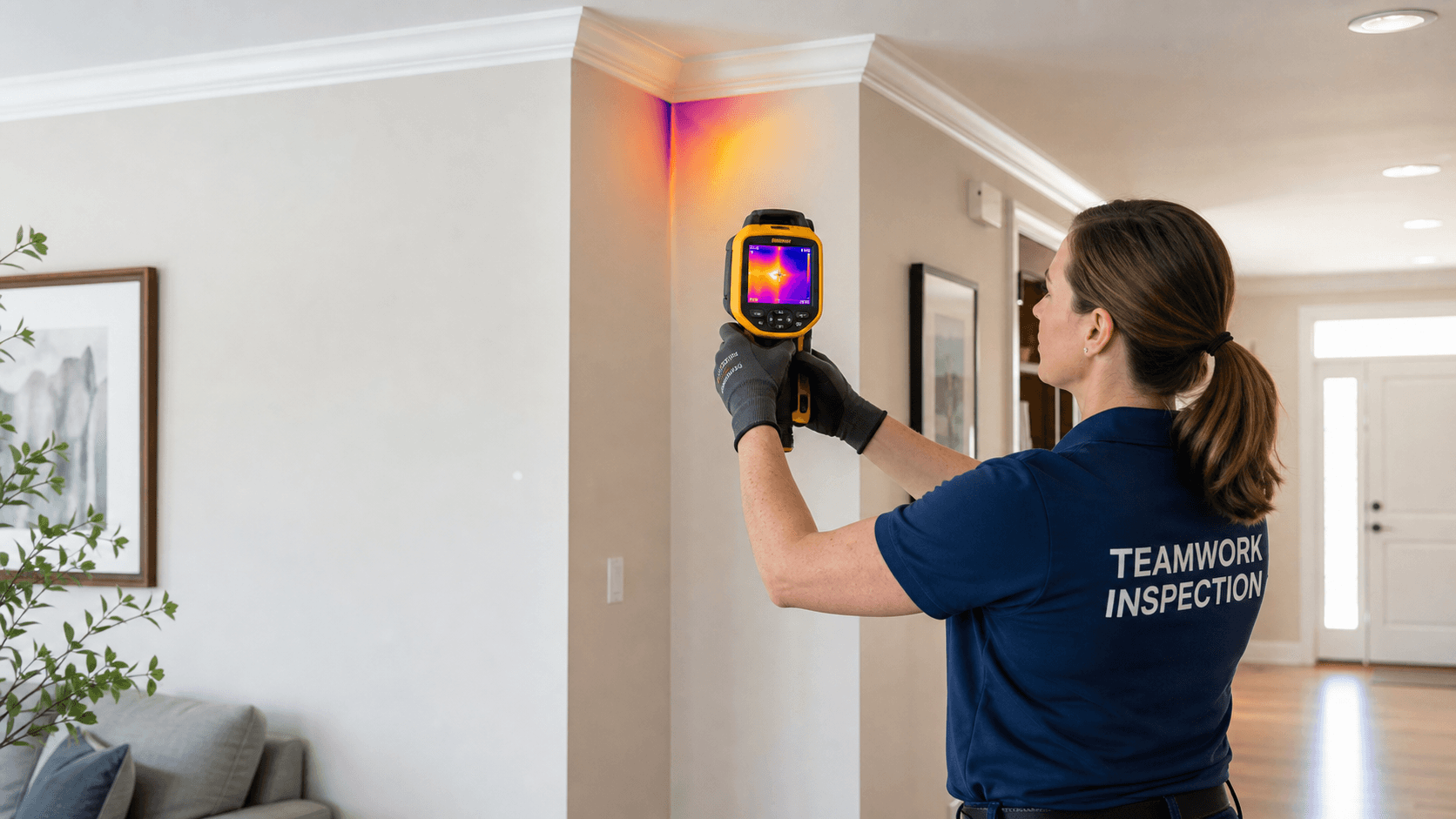
Advanced diagnostics
Non-invasive infrared home inspection technology helps detect hidden moisture, insulation gaps, HVAC concerns, and electrical hotspots before they become costly emergencies.
Method and benefits
Thermal imaging evaluates temperature differences across building materials, helping reveal patterns associated with moisture, energy loss, and overheating components.
Evaporating moisture can cool surfaces. Infrared scanning helps identify patterns that may indicate leaks around roofs, walls, ceilings, foundations, or plumbing.
Overloaded circuits, loose connections, or failing breakers may generate abnormal heat. Thermal scans can help flag areas that need further electrical review.
Temperature differences can reveal missing insulation, draft paths, thermal bridging, and possible duct leakage that affect comfort and efficiency.
Thermal findings are documented with context so you can understand what was observed, why it matters, and what next step is recommended.
Scope
Infrared scans are most useful when interpreted alongside visual inspection, building conditions, weather, occupancy, and moisture measurements where appropriate.
Pricing factors
Starting prices are provided for planning. Final pricing can vary by property size, age, number of units, system complexity, accessibility, optional testing, lab work, reporting requirements, and the inspection deadline.
Thermal imaging note
Thermal imaging is a diagnostic aid, not X-ray vision. Findings should be interpreted with visual evidence, site conditions, and further evaluation when needed.
We document the visible condition, explain what matters, and help you decide what to do next with confidence.
Schedule now